
Posture and the Brain: Can the Way We Move Influence How We Think?
When most people think about posture, they picture sitting or standing straight, pulling their shoulders back or trying not to slouch. But posture is much more than how you look.
Research by Dr Wayne Haynes, chiropractor and PhD researcher in posture, movement and brain function, has explored how the way we organise our body may be connected with the way we process information, understand our surroundings and respond to the world around us
Posture is more than standing still
Our posture is constantly changing. Every time we walk, reach, turn, balance or look around, the brain combines information from our eyes, inner ear, muscles, joints and the surface beneath our feet.
Rather than thinking of posture as a fixed position, it may be more useful to think of it as a moving and adaptable system.
The brain continually works out questions such as:
Where am I?
Which way is upright?
What is moving around me?
Am I stable enough to move?
Where should I direct my attention next?
This means that posture, balance, movement and thinking are not completely separate processes.

What does cognition have to do with posture?
Cognition simply means the mental processes involved in things such as attention, learning, memory, decision-making and understanding our surroundings.
Dr Haynes’ research has investigated the relationship between postural control, visual perception and cognitive development, particularly during childhood.
Studies involving schoolchildren have found associations between postural stability, perception of gravitational vertical, physical activity and measures of academic performance. [1–4]
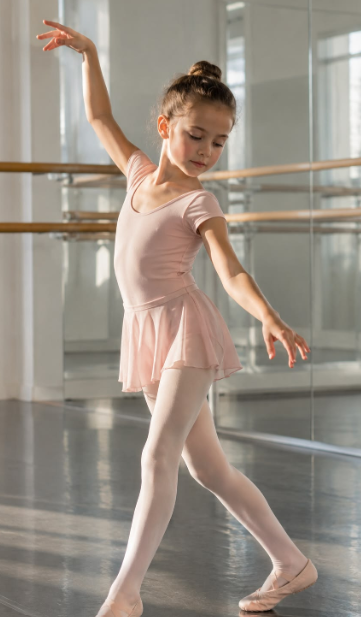
As children grow, their ability to balance, judge vertical or upright, interpret visual information and solve cognitive tasks continues to change. These abilities do not necessarily develop in a simple straight line. At some stages, children may explore different ways of organising their body before a more stable strategy develops.
This is important because the brain is not simply controlling a body that happens to be upright. Our upright body helps determine what we can see, what we can reach, where we can move and which possibilities are available to us.
Why does this matter?
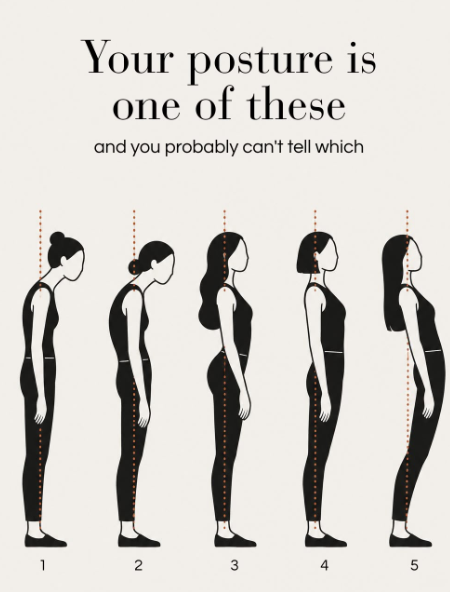
Posture should not simply be judged as “good” or “bad” from a photograph.
At Burpengary Chiropractic Centre, we are interested in how people actually move, balance and function in everyday life. Understanding posture as a flexible interaction between the body, brain and environment provides a much richer picture than simply trying to make everyone stand the same way.
Our goal is to help people move well, feel confident in movement and remain active through every stage of life.
References
Haynes W, Waddington G, Adams R, Isableu B. Relationships Between Accuracy in Predicting Direction of Gravitational Vertical and Academic Performance and Physical Fitness in Schoolchildren. Frontiers in Psychology. 2018;9:1528.
Haynes W, Waddington G, Adams RD. Associations among Balance, Physical Activity, Physical Fitness, and Academic Results in Schoolchildren. Journal of Exercise Science & Fitness. 2018.
Bagust J, Docherty S, Haynes W, Telford R, Isableu B. Changes in Rod and Frame Test Scores Recorded in Schoolchildren during Development – A Longitudinal Study. PLoS ONE. 2013;8(5).
Haynes W, Waddington G, Adams R. Physical activity, academic and developmental measures in older primary school-children: A principal components analysis. Cogent Psychology. 2017.
