Laser Therapy for Back Pain: Helping You Move With More Confidence
Laser Therapy for Back Pain: Helping You Move With More Confidence
Back pain has a way of creeping into every part of life. It can make getting out of bed harder, turn a day at work into a struggle, and make simple things like walking, gardening, exercising or playing with your children feel less enjoyable. When pain begins to limit movement, people often start looking for treatment options that are gentle, non-invasive and designed to support recovery.
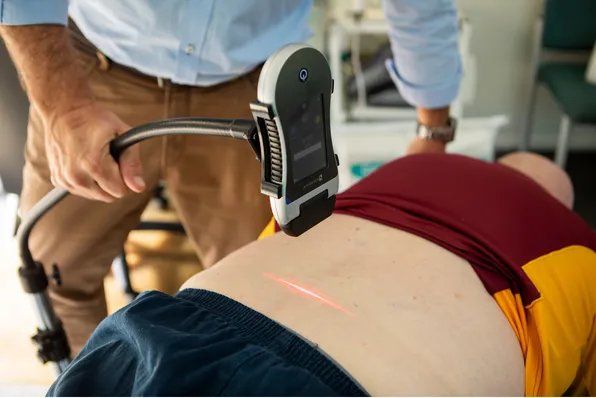
One option attracting increasing interest is laser therapy for back pain, also known as photobiomodulation or low-level laser therapy.
Therapeutic laser uses specific wavelengths of light directed into body tissues. Unlike surgical lasers, it does not cut or burn. Instead, the light interacts with cells and may influence some of the natural processes involved in pain, inflammation and recovery.
For many people, one of the most appealing features of laser therapy is that it is non-invasive and generally comfortable. There are no needles and no incisions. This can be especially helpful when the back already feels sensitive, stiff or difficult to move.
Low back pain is one of the most common health problems in the world. The World Health Organization estimates that around 619 million people experienced low back pain in 2020, making it the leading cause of disability globally (1).
Researchers have been studying whether laser therapy can help people with ongoing back pain. One large review looked at 15 different clinical trials involving more than 1,000 people. The researchers found that, when the laser was used at an appropriate dose, some people with long-term lower back pain experienced pain relief (2).
Another review looked at a stronger form of therapeutic laser called high-intensity laser therapy. It found that people receiving this treatment often reported less pain and, in some cases, better ability to carry out normal daily activities (3).
It is important to remember that back pain is rarely about just one muscle, joint or structure. Sleep, stress, previous injury, activity levels, strength, movement confidence and sensitivity of the nervous system can all influence how pain feels. Laser therapy can also be used as one part of the broader treatment approach.
Sometimes reducing pain, even for a period of time, can create an important opportunity. It may make movement feel easier and help someone begin exercising, walking or returning to activities they have been avoiding.
When appropriate, laser therapy can be combined with chiropractic or manual therapy, mobility work, exercise and practical advice. The aim is not simply to chase the painful area. It is to help the person regain movement, confidence and participation in the things that matter to them.
Because successful back pain care is not only about feeling less pain.
It is about getting more of your life back.
1 World Health Organization. Low back pain. WHO Fact Sheet. 2023.
2 Glazov G, Yelland M, Emery J. Low-level laser therapy for chronic non-specific low back pain: a meta-analysis of randomised controlled trials. Acupuncture in Medicine. 2016;34(5):328–341.
3 Abdildin Y, Tapinova K, Jyeniskhan N, Viderman D. High-intensity laser therapy in low back pain management: a systematic review with meta-analysis. Lasers in Medical Science. 2023;38:166.
