Headaches and Migraines: Understanding Your Nervous System and How Chiropractic Care Can Help
Did you know that headaches aren't always just about your head? Your neck, nervous system, movement and everyday experiences can all play an important role.
Headaches are among the most common health complaints, affecting people of all ages. Whether it's a dull ache, persistent pressure or a migraine, headaches can influence our ability to work, concentrate, move and enjoy everyday life.
Understanding how your nervous system contributes to headaches can help you explore effective ways to manage them.

Why Do We Get Headaches?
Your nervous system constantly receives information from your muscles, joints, eyes and surroundings. Your brain combines this information with previous experiences to help coordinate movement and interpret sensations, including pain.
Interestingly, the nerves supplying the upper neck communicate with pathways involved in processing pain from the head and face. This connection, known as the trigeminocervical complex, helps explain why neck discomfort and headaches can occur together. [1]
Understanding the Different Types of Headaches
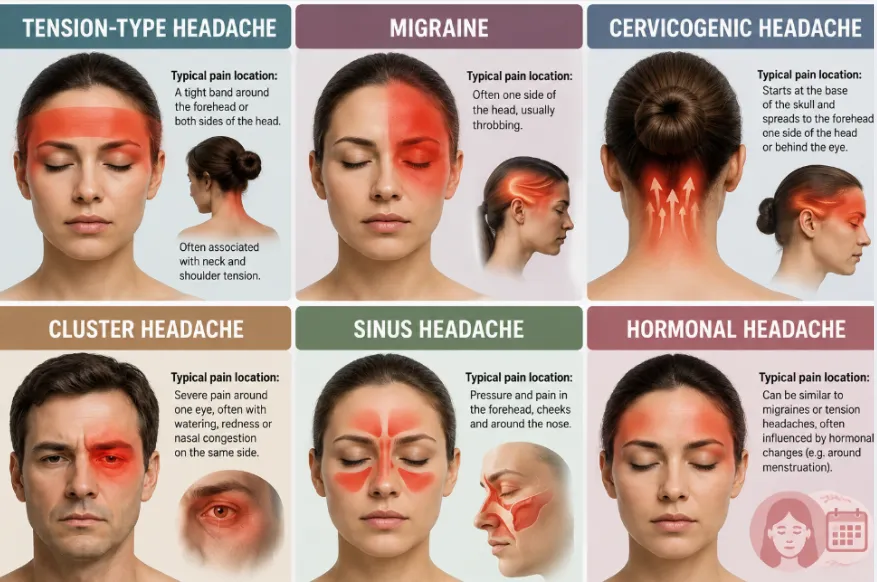
1. Tension-Type Headaches
Often described as tightness or pressure around the forehead or sides of the head, tension-type headaches may be influenced by stress, sleep patterns and tenderness in the neck and shoulder muscles.
2. Migraines
Migraines are a neurological condition involving changes in nervous system activity and sensory sensitivity. Symptoms may include throbbing pain, nausea, sensitivity to light and sound, or visual disturbances.
Research highlights how the brain processes sensory information differently during migraine episodes. [2]
3. Cervicogenic (Neck-Related) Headaches
These headaches originate from structures within the neck. Pain may begin at the base of the skull and spread towards the forehead or behind the eyes.
They are particularly relevant to chiropractic care because neck movement, joint function and sensory information can contribute to symptoms. [1,3]
4. Cluster Headaches
Cluster headaches involve episodes of intense pain, usually around one eye. They are a distinct neurological headache condition requiring specialised medical management.
5. Hormonal and Sinus-Related Headaches
Hormonal fluctuations can influence headache patterns, particularly around menstruation. Sinus inflammation can also produce facial and head pain, although some suspected sinus headaches are actually migraines.
6. Medication-Overuse Headaches
Frequent use of certain headache medications can sometimes contribute to recurring headaches. Recognising this pattern with a healthcare professional can help guide management. [4]
How Can Chiropractic Care Help Your Nervous System?
At Burpengary Chiropractic Centre, we recognise that headaches involve more than the location of pain.
The neck contains sensory receptors that continuously provide information about head position and movement. This information interacts with the brain's wider sensory and movement systems.
Chiropractic care may help manage the neck-related factors contributing to headaches through:
Joint mobilisation or manipulation: Supporting comfortable neck movement and helping manage cervicogenic headache symptoms.
Movement and exercise: Improving neck mobility, strength and movement confidence.
Muscle and soft-tissue treatment: Addressing tenderness and discomfort around the neck and shoulders.
Individualised advice: Exploring sleep, physical activity, work habits and other factors influencing your headache experience.
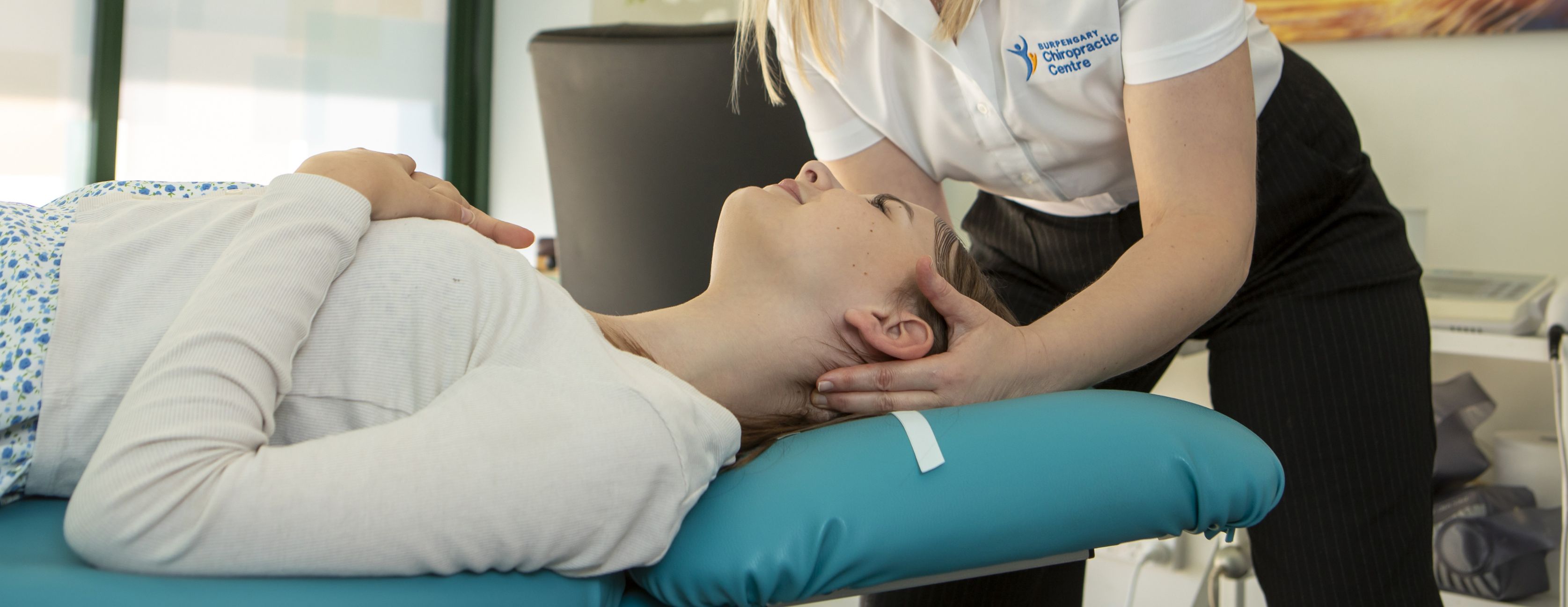
A 2022 systematic review and meta-analysis involving 20 studies and 1,439 participants found that manual therapies, including spinal manipulation, may reduce headache intensity and frequency in people experiencing cervicogenic headaches. [3]
Another systematic review identified benefits from manual therapy approaches for cervicogenic headaches. [5]
For migraine sufferers who also experience neck discomfort, addressing musculoskeletal contributors may be a useful part of their broader care.
Understanding Your Headaches Opens New Possibilities
Everyone experiences headaches differently. Understanding how your movement, nervous system and daily activities interact can help identify strategies that work for you.
At Burpengary Chiropractic Centre, we take the time to understand your symptoms, assess your movement and explore appropriate treatment options.
Because feeling better isn't simply about having less pain — it's about feeling more comfortable, confident and able to enjoy everyday life.
Contact our friendly team to arrange an assessment.
Burpengary Chiropractic Centre — Caring for you through every stage of life.
If you experience a sudden, unusually severe headache or new neurological symptoms, seek urgent medical assessment.
Scientific References
1. Bartsch, T., & Goadsby, P. J. (2003). The trigeminocervical complex and migraine: Current concepts and synthesis. Current Pain and Headache Reports, 7(5), 371–376.
https://doi.org/10.1007/s11916-003-0036-y
2. Ashina, M. (2020). Migraine. New England Journal of Medicine, 383, 1866–1876.
https://doi.org/10.1056/NEJMra1915327
3. Bini, P., Hohenschurz-Schmidt, D., Masullo, V., Pitt, D., & Draper-Rodi, J. (2022). The effectiveness of manual and exercise therapy on headache intensity and frequency among patients with cervicogenic headache: A systematic review and meta-analysis. Chiropractic & Manual Therapies, 30, 49.
https://doi.org/10.1186/s12998-022-00459-9
4. Headache Classification Committee of the International Headache Society. (2018). The International Classification of Headache Disorders, 3rd edition. Cephalalgia, 38(1), 1–211.
https://doi.org/10.1177/0333102417738202
5. Núñez-Cabaleiro, P., & Leirós-Rodríguez, R. (2022). Effectiveness of manual therapy in the treatment of cervicogenic headache: A systematic review. Headache, 62(3), 271–283.
