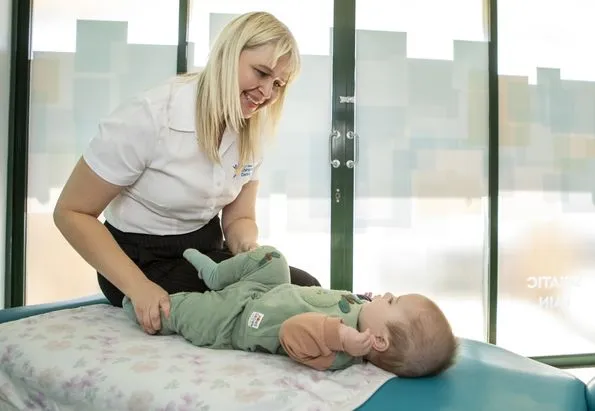
From Tiny Toes to Big Steps: Discover Advanced Paediatric Chiropractic Care for Babies and Children
What is an Advanced Paediatric Chiropractor, and how can specialised training support your child's movement, comfort and development?
From their very first movements to rolling, crawling, walking and exploring the world, babies and children undergo remarkable changes.
Their muscles, joints and nervous systems develop together through movement and experience. Sometimes parents notice that their baby prefers turning their head one way, seems uncomfortable in certain positions or experiences periods of unsettled behaviour.
At Burpengary Chiropractic Clinic, Dr Jana Kyte is an Advanced Paediatric Chiropractor, with additional training to assess children's musculoskeletal health, understand their developmental needs and provide appropriate, gentle care.
What Is an Advanced Paediatric Chiropractor?
In Australia, an Advanced Paediatric Chiropractor (APC) has completed a minimum of two years of postgraduate paediatric training, including written and practical examinations, with ongoing education requirements.
Training pathways such as Chiropaeds explore infant anatomy, neurological development, paediatric assessment, developmental milestones, musculoskeletal conditions and clinical decision-making.
This additional education helps chiropractors recognise normal developmental variations, investigate movement concerns and identify when collaboration or referral to another health professional is appropriate.
APC is a professional recognition, rather than a separate AHPRA specialist registration.
What Happens at Your Baby's First Chiropractic Visit?
Your child's first appointment should be relaxed, gentle and centred around understanding their individual needs.
Your chiropractor will discuss pregnancy, birth, medical history and any concerns about your child's comfort, movement or development.
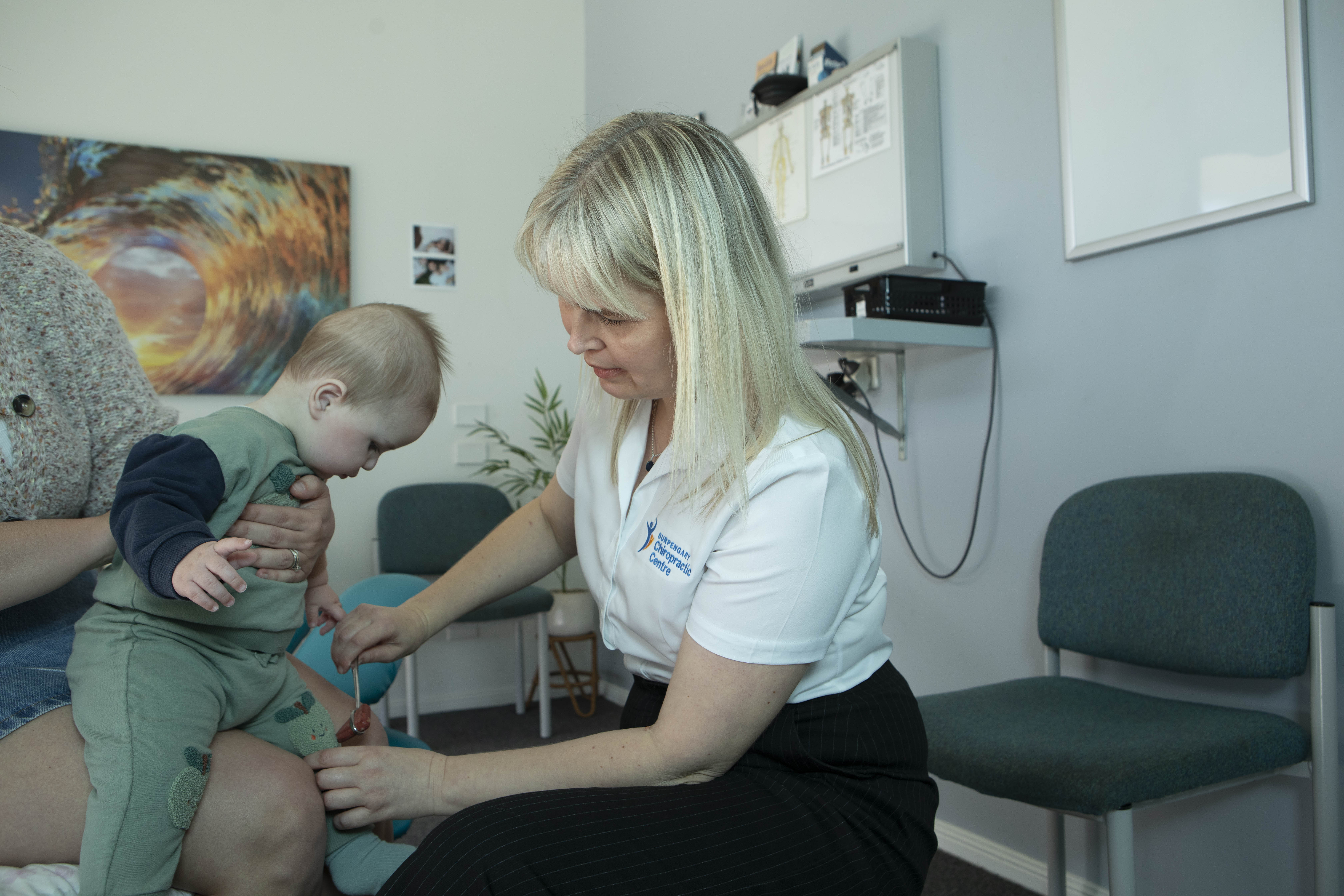
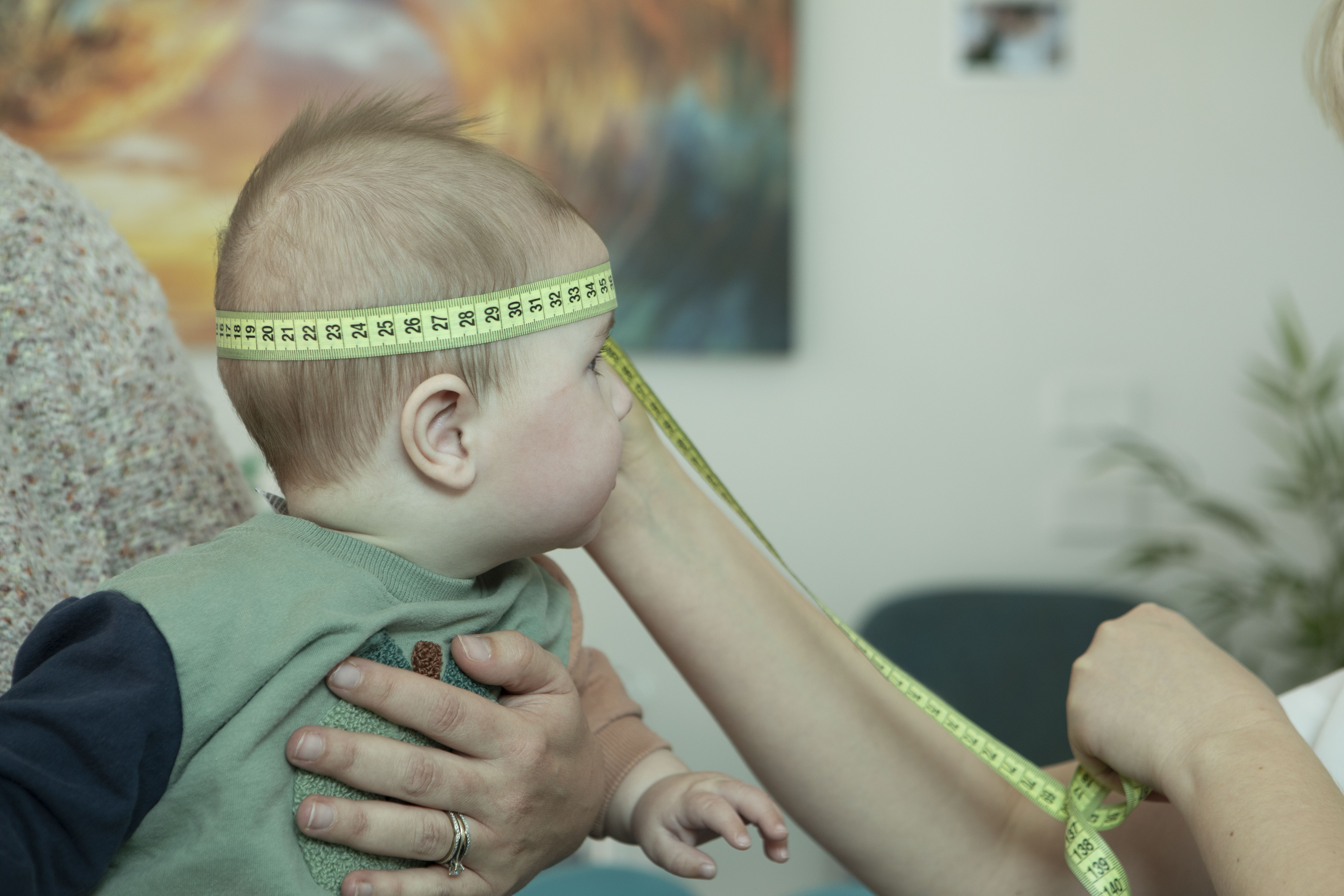
The physical examination may include assessing:
Head and neck movement and preferences
Muscle tone, flexibility and movement symmetry
Age-appropriate reflexes and motor skills
Comfort during positioning and movement
Developmental milestones, including rolling, sitting and crawling
Every child develops differently. The goal is to understand their individual movement patterns, not compare them rigidly against other children.
What Does Research Tell Us About Paediatric Manual Therapy?
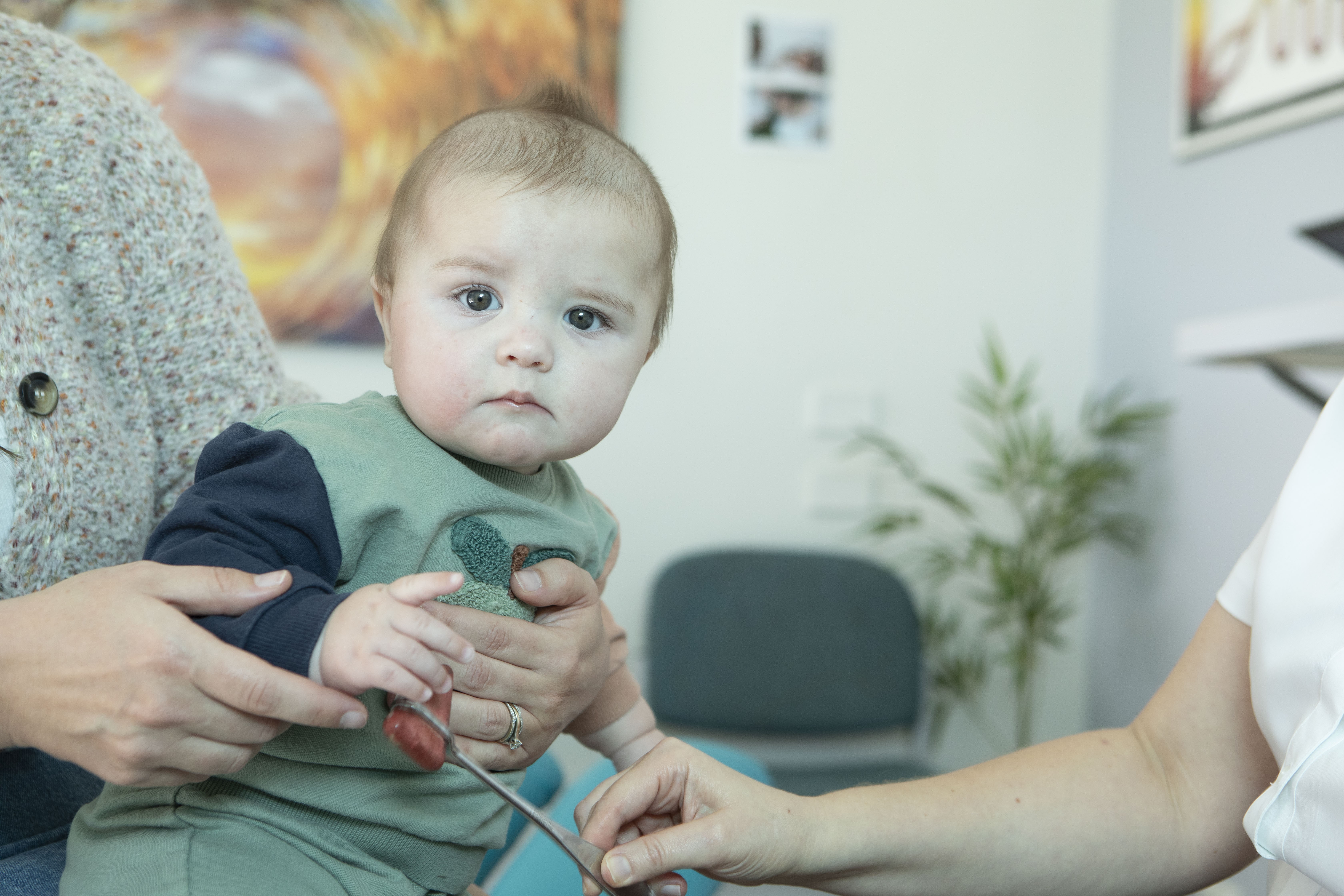
Research into gentle manual therapy for babies is growing, with several encouraging findings.
A 2023 systematic review and meta-analysis reported that chiropractic manual therapy was associated with reduced crying time in infants with colic, although the authors recognised limitations in the available evidence.
A 2025 review also found promising results across several gentle manual therapies for infant colic, including improvements in crying and, in some studies, sleep duration.
Research involving babies with positional plagiocephaly (flattening of the head) has found that adding specialised manual therapy to parental education can improve neck movement and measures of head symmetry.
These findings suggest that carefully selected manual approaches may benefit some infants, particularly when combined with developmental guidance and parental education.
Larger, higher-quality studies are still needed to establish which approaches work best and for whom.
Is Chiropractic Care Gentle for Babies?
Absolutely, paediatric care should be adapted to the child's age, anatomy and developmental stage.
Where clinically appropriate, management may include gentle hands on approaches, comfortable positioning, movement activities and advice for parents.
Not every baby requires hands-on treatment. Sometimes providing reassurance, developmental advice or arranging further assessment is the most appropriate care
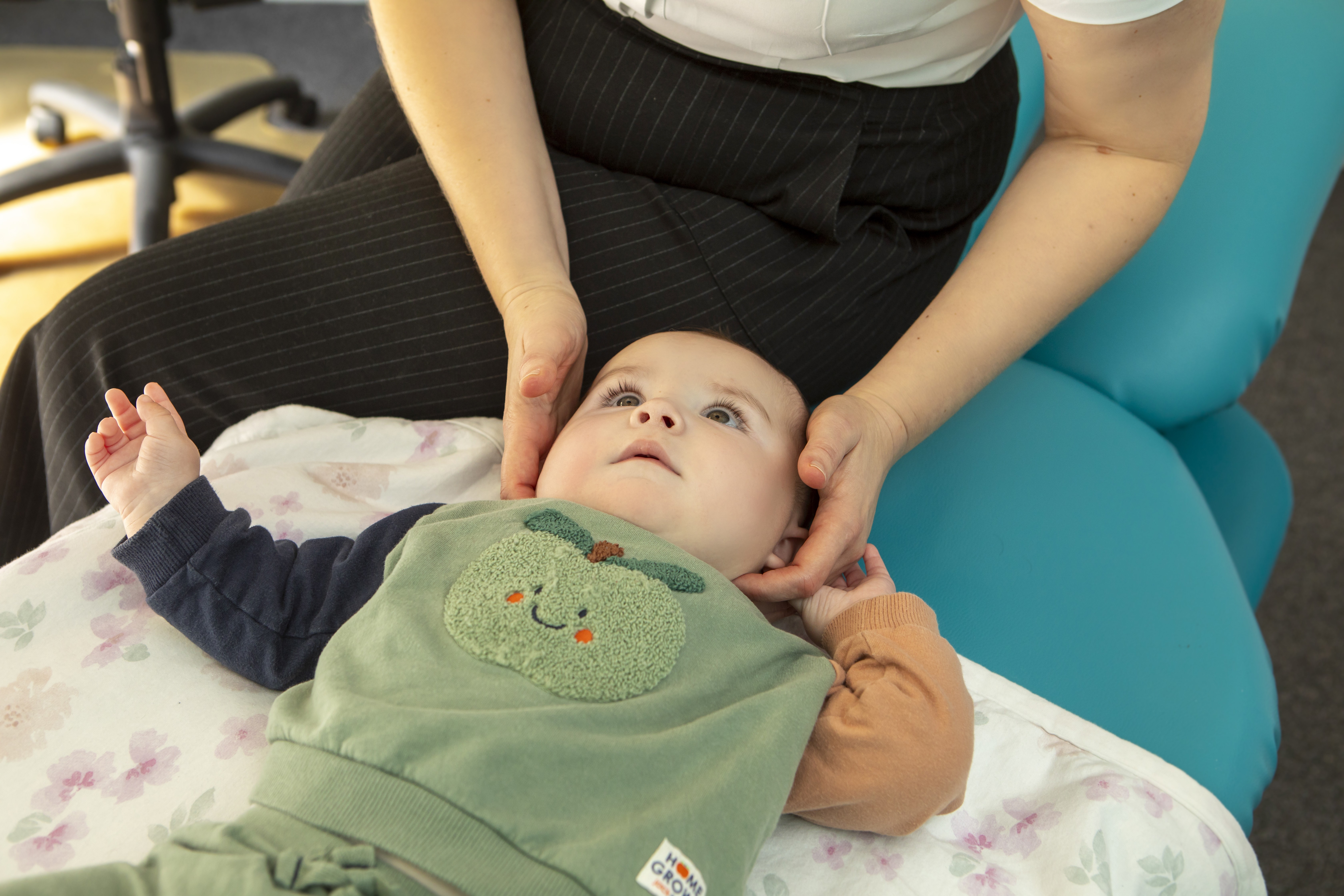
Supporting Your Child as They Grow
From tummy time and reaching to crawling, walking and playing, movement gives children opportunities to explore and learn.
At Burpengary Chiropractic Clinic, Dr Jana Kyte brings her advanced paediatric chiropractic training to an individualised, evidence-informed approach to children's musculoskeletal health.
Our aim is to help parents understand their child's movement, explore appropriate care options and feel confident about their child's development.
Because every child has their own journey of growing, moving and discovering the world.
References
Australian College of Chiropractic Paediatrics. Advanced Paediatric Chiropractor.https://www.accp.asn.au/apc
Comparison of Effectiveness of Manual Therapy for Infant Crying: Systematic Review and Meta-analysis of Randomized Controlled Trials. 2023. https://pubmed.ncbi.nlm.nih.gov/38162473/
Exploring Manual Interventions for Infantile Colic: A Scoping Review of the Evidence. Children. 2025;12(9):1246. https://doi.org/10.3390/children12091246
Pastor-Pons I, et al. Effectiveness of pediatric integrative manual therapy in cervical movement limitation in infants with positional plagiocephaly: a randomized controlled trial. Italian Journal of Pediatrics. 2021;47:41. https://doi.org/10.1186/s13052-021-00995-9
Pastor-Pons I, et al. Efficacy of pediatric integrative manual therapy in positional plagiocephaly: a randomized controlled trial. Italian Journal of Pediatrics. 2021;47:132. https://doi.org/10.1186/s13052-021-01079-4
Chiropractic Board of Australia. Statement on Paediatric Care. September 2026. https://www.chiropracticboard.gov.au/
